

.avif)
So i was looking to get a Oneplus13s for my sister last week and the craziest thing happened. The phone was actually cheaper on Blinkit than on Amazon or on any other website. I was dumbfounded because i always thought that Quickcommerce is usually more expensive than other platforms and the 10 minute delivery justifies the marginal additional cost.
But getting it cheaper on QC sent me into a spiral. And that’s where this blog originated from. From an ADHD brain spiralling on how the world is changing, and how we need to change as founders to keep winning.
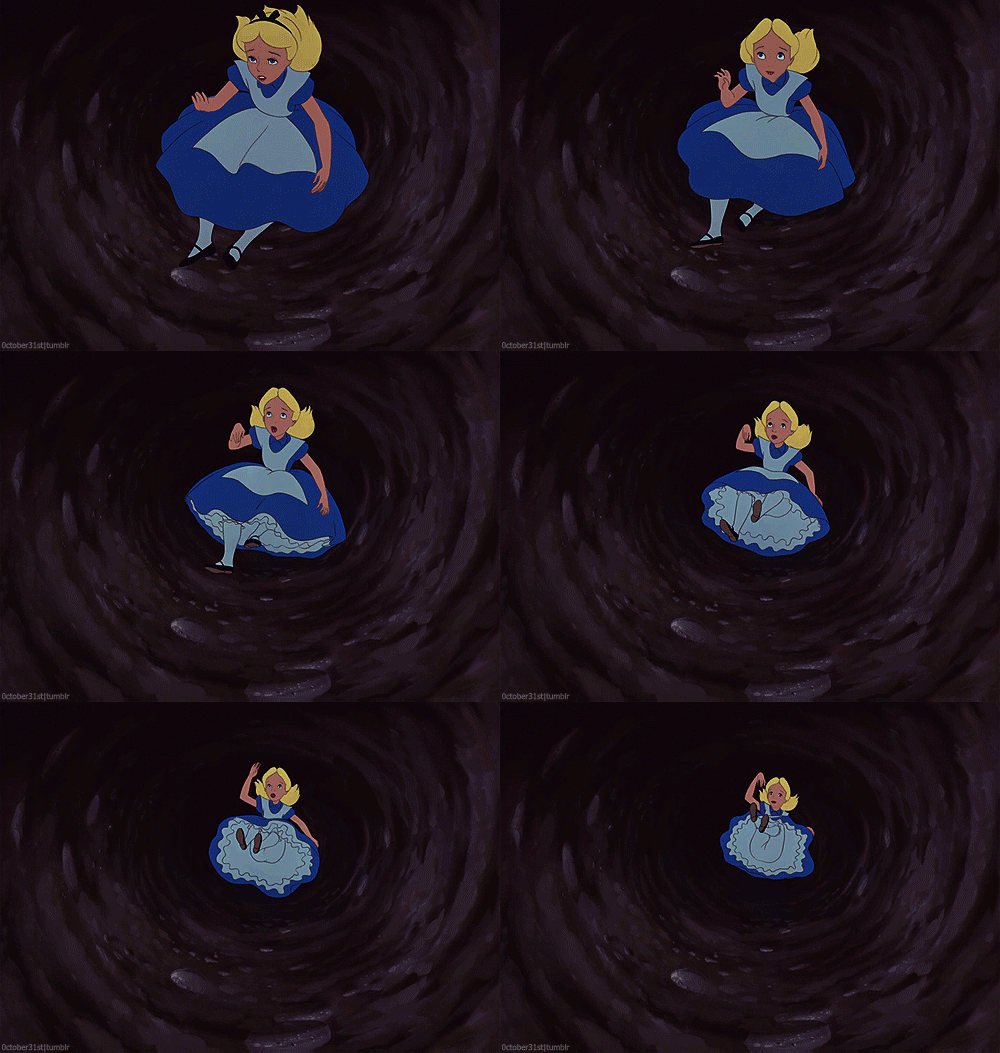
The world isn’t getting lazier.
It’s getting faster.
And the faster the world gets, the more the human brain rewires itself around one expectation:
“I should get what I want… immediately.”
Groceries in 10 minutes.
Food in 18 minutes.
Content in 0 seconds.
Answers in 0.1 seconds.
Dopamine on demand.
We’re living in a time where effort is the anomaly.
And instant fulfilment is the baseline.
And here’s the tricky part:
For marketers and businesses, this shift is a goldmine.
But for founders, especially in D2C, it’s also a silent trap.
A beautiful, profitable, seductive trap.
Let me explain.
Quick commerce and overconsumption are not just changing buying patterns.
They’re changing thinking patterns.
When everything arrives quickly, your brain starts expecting everything to arrive quickly. And when desire → swipe → reward becomes the default loop, two things happen:

This is the dream scenario for marketers.
Because predictable emotions = predictable conversions.
Every algorithm on earth is now optimising for your weakest moment:
We’re not selling to consumers anymore.
We’re selling to dopamine cycles.
That’s the opportunity.
That’s also the danger.
Let’s talk about the upside first. Because the upside is insane.
When the mental effort to purchase disappears, buying becomes:
This allows early-stage brands to acquire customers way faster than they could even 5 years ago.

And when attention is this short, the brands that win are the ones that can:
If you're good at storytelling and speed, this era is built for you.
We’ve entered a world where your phone knows:
Marketers who understand context, timing, and emotional triggers can drive unreal conversion rates.
Earlier generations had to save early:
These milestones forced financial discipline.
Today?
Which means more disposable income for short-term purchases.
Pair that with instant gratification loops and you get the perfect conditions for consumption-led growth.
This is the largest window of opportunity D2C founders have ever seen.

Because It’s Real.
Every opportunity hides a cost.
And this one has several.
When customers get everything instantly, they also expect everything instantly.
They switch fast.
They get bored faster.
They seek novelty constantly.
They expect “better” every two minutes.
Your brand is one dopamine hit in a sea of alternatives.
If your differentiation is shallow, you’re dead.
Impulse-driven channels are great for:
But terrible for:
Platforms will push you to discount, because discounts drive instant gratification.
But every discount is a tax on your long-term unit economics.
In an instant gratification world:
This forces founders into an infinite cycle of:
The treadmill never slows.
Retention today is not about:
It’s about deep meaning.
Because dopamine alone cannot hold attention long-term.
Customers stay with brands that:
If you don’t build this, you’ll bleed LTV.
We are entering a fork in the road - two types of brands will rise.
They win impulse.
They win speed.
They win attention.
They scale fast.
But they burn out fast too:
These brands are volume machines, not long-term businesses.
These brands win for one reason, and one reason only:

They know how to tell a story.
Not a tagline.
Not a USP.
Not a founder quote.
A story.
Because in a world built on instant gratification, dopamine loops, and vanishing attention spans, storytelling is the only lever left that creates meaning.
And meaning is the only thing that creates memory.
Memory is the only thing that creates loyalty.
Loyalty is the only thing that creates retention.
Retention is the only thing that creates profit.
This is why the brands that survive the instant-gratification economy are not the ones with the fastest delivery...
They are the ones with the deepest story.
These brands build:
For these brands:
And here’s the blunt truth:
They scale slower, but they survive longer.
Because story compounds.
Dopamine doesn’t.
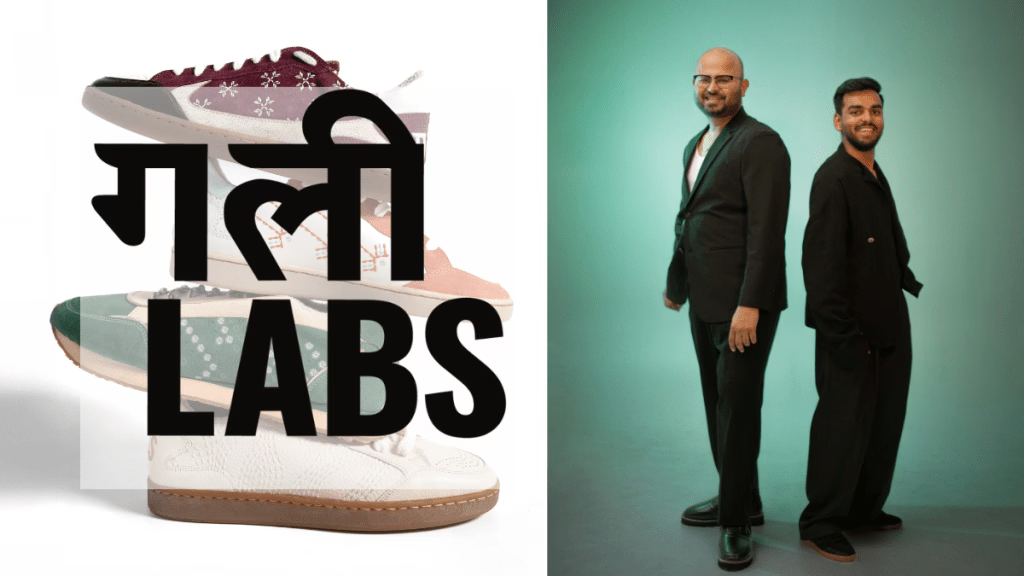
Gully Labs isn’t just selling sneakers.
They’re tying Indian narratives to Western-style streetwear.
The product is the medium.
The story is the message.
And the message is culture.
Every drop feels like a page out of a larger book:
India’s streets, nostalgia, rebellion, pride, identity — all woven into footwear.
People aren’t buying shoes.
They’re buying belonging.
This is what story looks like in the real world.
Cinnamon Kitchen is not “just a bakery.”
It’s a founder-first, nostalgia-driven kitchen that brings childhood warmth into modern, healthy bakery products.
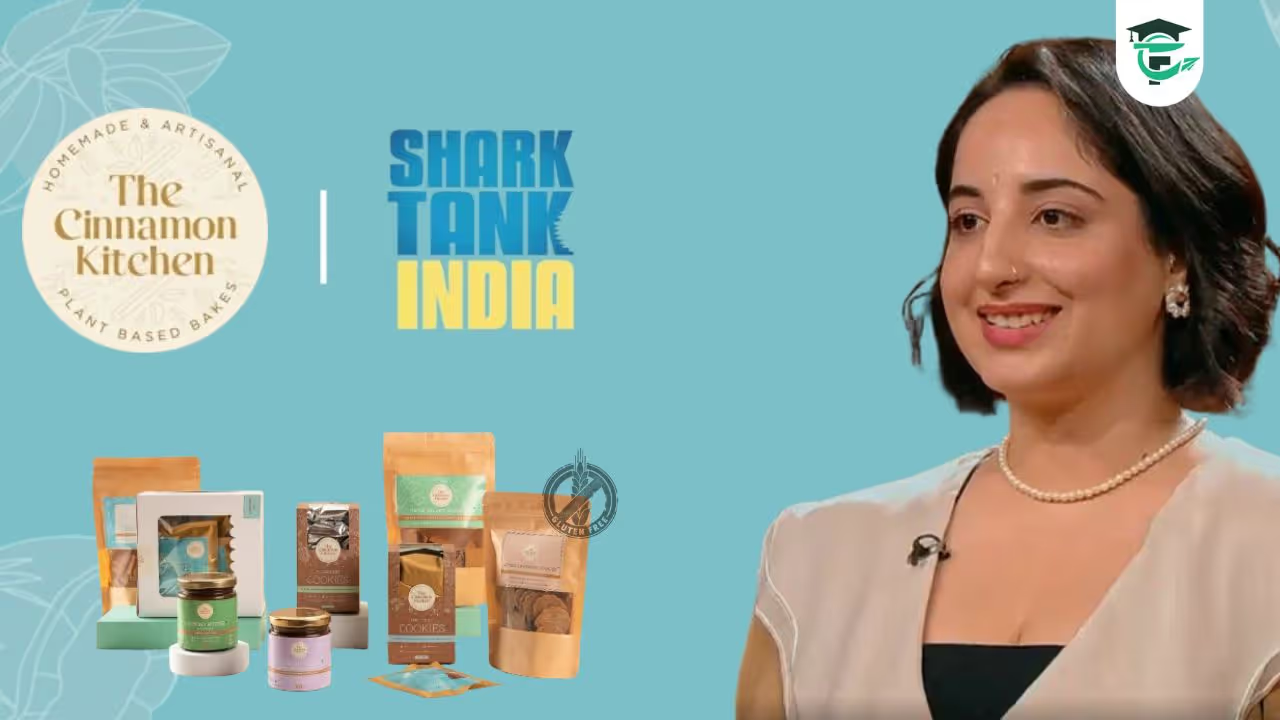
When you buy a CK cookie or their Christmas cake, you’re not buying macros.
You’re buying:
Healthy eating becomes emotional.
Product becomes personal.
And customers stay for the story, not the calories.
The Only Solution Is Storytelling.**
There is no bigger moat.
There is no deeper connection.
There is no more scalable advantage.
In a world where everyone is fighting for seconds of attention, story is the only thing that makes a brand unforgettable.
And this is exactly what we’ve built at Porcellia.
A storytelling-first growth engine.
Not short-term hacks.
Not dopamine farming.
Real narratives that create real retention and build real brands.
Simple answer: It depends on which founder you choose to be.
Because in a world addicted to “now”, the only thing powerful enough to make someone come back later… is a story.
But Only If You See It Clearly.
We’re living through the first decade of a behavioural rewriting.
A rewiring of how people shop, think, desire, choose, and commit.
This isn’t doom.
This isn’t destiny.
This is design.
And founders who understand this design,
who understand how humans behave when everything is instant,
are the founders who will build the next generation of enduring D2C brands.
Use the instant world for acquisition.
Use the meaningful world for retention.
Use story to anchor your brand in a distracted mind.
Because products get delivered.
Dopamine gets consumed.
But stories?
Stories get carried forward.
In a world optimized for speed and dopamine, meaning is the only thing that lasts.
Read the full storyIn a world optimized for speed and dopamine, meaning is the only thing that lasts.
Read the full story
Get your hands on the the stuff that actually compounds.
Positioning. Retention. Content. Community.

Welcome to Finsweet's accessible modal component for Webflow Libraries. This modal uses Webflow Interactions to open and close. It is accessible through custom attributes and custom JavaScript added in the embed block of the component. If you're interested in how this is built, check out the Attributes documentation page for this modal component.
See docs