

There is a strange advantage to building consumer businesses in India today: we don't have to predict the future. We can study it. Spend enough time studying the biggest D2C brands in the US…the brands that have scaled from millions to tens, hundreds and eventually billions of dollars in revenue, and the patterns become hard to miss. The products and categories may be different, but the underlying growth architecture keeps repeating. Acquisition gets harder. LTV becomes more important. Offers become more sophisticated. Creative becomes a bigger part of targeting. Retention becomes a core growth engine. And increasingly, the brands that win are the ones that build systems around all of it.
India is now beginning to move through many of these same shifts. Some are already here. Others are coming. And that gives Indian D2C founders an extraordinary advantage: the playbook exists.
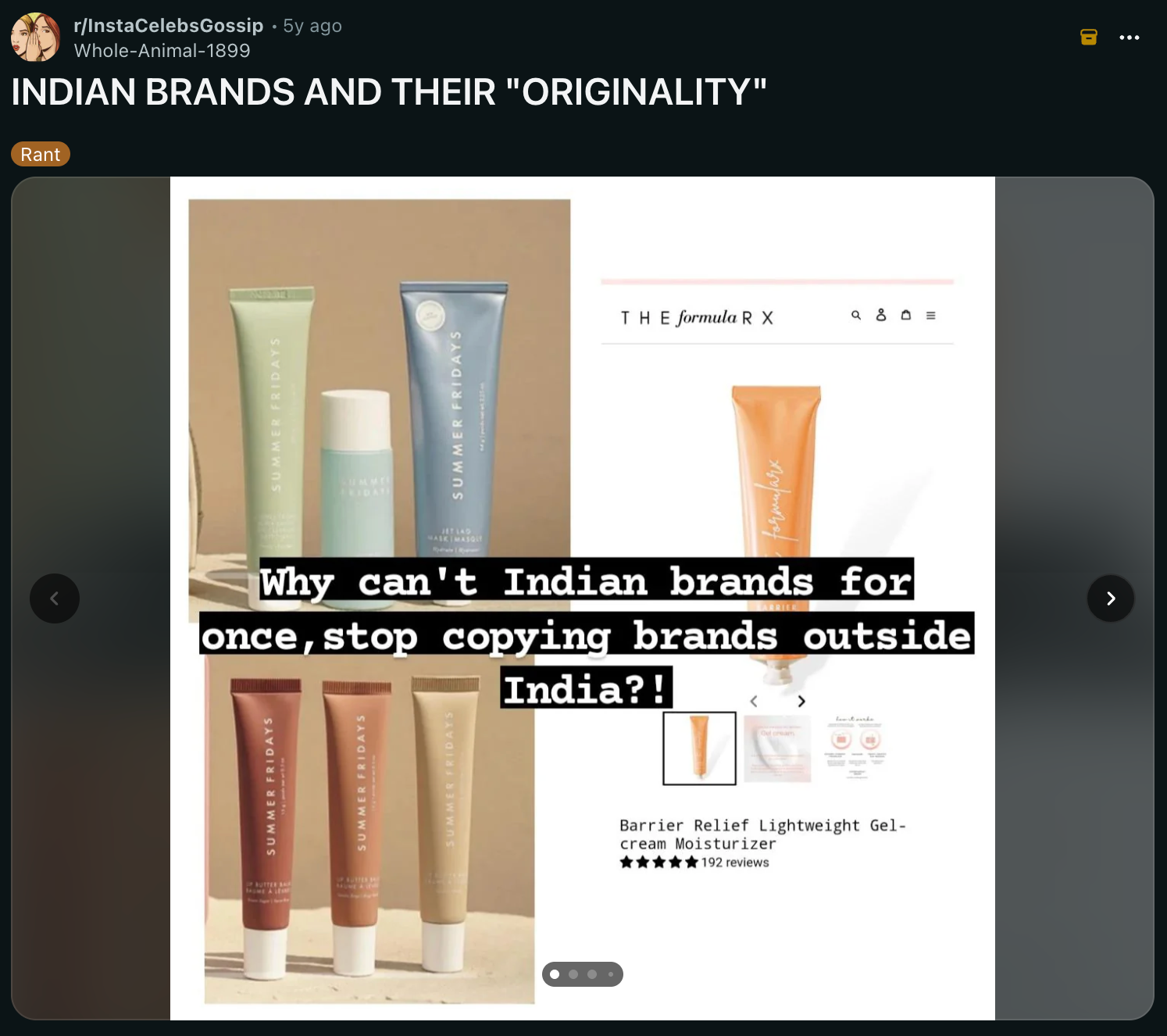
There is already a growing tendency in Indian D2C to look towards America for inspiration. Brands like Minimalist, Mymuse and many others have borrowed elements of Western D2C brands-their visual language, positioning, product architecture, offers and website experience. But we think that is the wrong lesson to take. India doesn't need Indian copies of American brands. We need original Indian brands built around Indian consumers, Indian insights and Indian opportunities. What we should borrow is not the brand, but the system underneath it: how it acquires customers, converts them, retains them, expands LTV and compounds growth. Don't copy the brands. Understand the playbook.
The strongest D2C businesses are increasingly built around four connected ideas: build LTV before you buy more CAC; engineer the first purchase; make acquisition a continuous conversation; and own the customer relationship. These are not four isolated tactics. Together, they create a compounding growth engine.
The first era of D2C was largely built around one question: how cheaply can we acquire a customer? Acquire → Convert → Acquire more. The mature question is different: how much is this customer actually worth to me? LTV should be a founder obsession, not a quarterly metric. Because the more value you can create from every customer, the more you can afford to spend to acquire the next one. LTV becomes an acquisition weapon.
Basically, if you knew that every customer you acquire today will be worth 5-10x the AOV they are paying on their first purchase in the next 12 months, would you care if your CAC increased by 10 or 20% or even 30% for a few days?
And if a 30% CAC increase for a week or two still lets you sleep well at night, it basically means that you can keep the acquisition engine running much longer and going much harder than any of your competitors. That’s deadly AF.
Subscription is one of the cleanest ways to create predictable repeat purchase, particularly for naturally replenishing products. Brands like AG1 and IM8 have built subscription deeply into their models. India is about to enter this phase in a much bigger way. Over the next 12 months, subscription is likely to become one of the biggest conversations in Indian consumer. The logic is simple: a customer who is committed to buying from you repeatedly is worth more than a one-time buyer, and a higher LTV gives you more room to spend on acquisition.
For brands that don't naturally lend themselves to subscription, repeat purchase can come from newness. A new flavour. A new format. A new product. A new category. A new collection. Ridge expanded beyond wallets into bags, luggage, jewellery and tech. True Classic continues to introduce new products and styles. Bloom has built a broader portfolio across flavours, formats and products. The principle is simple: if customers want to try something new, give them something new within your brand. Product development is therefore a growth function-not simply an R&D function-because it can increase LTV, improve contribution margin, create new acquisition angles and give existing customers another reason to come back.
Subscription creates repeat purchase. New products create reasons to repeat. Retention amplifies both. This is where email and WhatsApp become particularly important in India. You don't want customers to remember you only when they need you. You want to bring them back, educate them, replenish them, introduce them to something new and keep creating reasons to engage.
Our brand Just Human is a useful example. A skincare brand selling a roughly ₹7,000 serum has achieved approximately 30% Month-2 repeat and around 50% Month-5 repeat-without relying on subscription. That's wild. There is no single formula for LTV. Sometimes it is subscription. Sometimes it is new products. Sometimes it is simply a better product. Almost always, retention amplifies the system. Your job as a founder is to keep finding ways to make every customer worth more. The best consumer businesses don't just acquire customers. They systematically create more value from customers they have already acquired. And retention starts with the first purchase.

Once you understand LTV, the next question is obvious: how do you get someone to make the first purchase? This is where a lot of Indian D2C brands still have a surprisingly weak answer. They think the job is to put a product on a website, show the price and then find a way to make that price smaller. But if you are building a premium or high-AOV brand, your job is not simply to discount. Your job is to engineer perceived value.
There is a reason so many Indian founders are uncomfortable with discounting today. The previous generation of D2C brands abused it: 50–70% sales, permanently inflated MRPs, endless flash offers and businesses buying customers with capital. The ecosystem has now swung to the other extreme. Founders building 'premium' brands often behave as though discounting itself is beneath them. Neither extreme makes much sense. As I wrote in our piece on the subject, there is good discounting, there is bad discounting, and treating the question as a moral one is simply bad strategy. Indian D2C Has Developed Discounting Trauma
The real question is not 'Should I discount?' It is 'Does this offer improve my economics?' If a discount increases conversion enough to reduce CAC, protects CM2 and brings a customer into a strong retention engine, it can be excellent customer acquisition infrastructure. If it trains customers to wait for sales, destroys perceived value or leaves you with terrible contribution margins, it is bad discounting. Premium positioning does not mean refusing to use commercial mechanics. It means knowing how to use them without making the brand feel cheap.
This becomes especially important when you are selling high-AOV products. A ₹5,000, ₹7,000 or ₹10,000 product cannot depend on '20% OFF' as its entire reason to exist. The customer needs to feel that they are getting significantly more value than the amount of money they are giving you. That value can come from the product itself, but it can also come from the way you package the purchase. The mistake is assuming value creation and discounting are the same thing.
This is where offer stacking becomes such an important skill. Instead of saying '₹7,000, now ₹5,600', you can build an offer around the same economics: a launch price, a bundle, a free gift, an additional product, free shipping, an extended warranty, priority shipping, a bonus consultation, early access, a limited edition, a buy-more-save-more structure, a subscription incentive, a loyalty benefit or some combination of these. You can use strike-through pricing, anchor prices, bundle economics, tiered offers, quantity breaks, free gifts with thresholds, buy-one-get-one mechanics, first-order incentives and genuine urgency. The point is not to use all of them. The point is to understand that the customer's perception of value is something you can engineer.
Think about the difference between '20% off' and 'Buy the ₹7,000 product and receive a ₹2,000 accessory, free priority shipping and an exclusive launch price until Friday.' The numerical economics may be surprisingly similar. The perceived value is not. One tells the customer that your product is cheaper. The other tells them that buying now gets them substantially more.
This matters even more for brands that want to remain premium. Luxury brands can often avoid offers because the brand itself carries enormous desire, margin and scarcity. Most Indian D2C brands are not luxury brands. They are premium or mass-premium businesses, and they still need to create a compelling value exchange. The answer is not endless discounting. It is a better understanding of pricing, packaging, anchoring and offer architecture.
The best brands continuously test this. Discount percentage. Gift versus discount. Bundle versus single SKU. One product versus a three-pack. Subscription versus one-time purchase. Free shipping threshold. Price anchoring. Strike-through price. First-order incentive. Buy-one-get-one. Tiered discounts. Cart thresholds. Upsells. Post-purchase offers. Even the wording and visual hierarchy of the offer. These are not cosmetic website changes. They are commercial experiments.
We have seen this repeatedly in D2C. A wellness brand with a ₹900 AOV increased AOV to roughly ₹1,100 simply by changing its free-shipping threshold. A supplement brand that was initially hesitant to move from ₹1,999 to ₹2,499 tested the price rather than arguing about it internally; the higher-price variant had a lower conversion rate but generated better revenue per visitor and MER. These are the kinds of experiments that founders miss when they think pricing is a brand decision rather than a growth lever.
The question therefore becomes: what is the highest-value exchange we can create for the customer while preserving healthy economics? That is a much more useful question than 'How much should we discount?'
The old funnel was simple: Ad → Product Page → Checkout. Modern acquisition is much more interesting. It has two major operating systems working together: creative strategy, and landing-page optimisation/CRO. You need a team for both. And you need an aggressive team for both.
Creative is no longer simply a production function. It is increasingly part of targeting. Meta's systems are getting better at finding the person most likely to respond to a piece of creative, which means the creative itself can define the audience. A founder who says 'our target audience is women 25–45' is barely saying anything useful. A creative that speaks specifically to postpartum hair loss, another that speaks to hair thinning from stress, and another that speaks to the desire for thicker-looking hair are effectively opening three different doors into the same brand.
That means the job of the creative team is not to make 30 versions of the same ad. It is to continuously discover new problems, motivations, objections, use cases, personas, cultural tensions and narratives that can make the product relevant to more people. UGC, founder-led content, product demonstrations, testimonials, before-and-after, social proof, educational content, comparisons, cultural commentary, creator content and offer-led ads are raw materials. The strategy is deciding which customer insight each one is trying to unlock.
The best creative systems therefore operate like a learning engine. Consumer research produces angles. Angles become briefs. Creatives are produced. Performance tells you what resonated. Those learnings go back into the next round of briefs. At PORCELLIA, this is why creative strategy is not separated from growth strategy. The creative team needs to know what the business is trying to solve, and the growth team needs to understand what the creative is teaching us about the customer.
But getting the right person to click is only half the acquisition problem. If the ad makes a promise and the landing page doesn't continue that conversation, you have paid to create intent and then thrown it away. A great creative can get someone interested in a specific problem, desire or use case. Sending them to a generic product page that talks about everything the brand does is often a complete mismatch.
The sophisticated version is a tight bridge: the specific problem in the ad continues onto the landing page; the imagery reflects the same person and context; the education answers the questions created by the ad; the proof addresses the relevant objection; the offer makes sense for that customer; and the CTA takes them naturally to the product. The ad makes a promise. The landing page has to keep it.
This is why landing-page optimisation is not a one-time website project. It is an ongoing growth function. You should be testing hero messages, page structure, product positioning, social proof, testimonials, pricing, bundles, offer presentation, FAQs, objection handling, product education, imagery, CTA placement, checkout friction and persona-specific experiences. A landing page should evolve as fast as your understanding of the customer does.
The result is a brand with many doors into it. Different creatives can speak to different problems. Different problems can lead to different landing-page experiences. And all of them can eventually converge on the same product. The best acquisition systems don't just buy traffic. They create relevance before the customer ever sees the checkout.
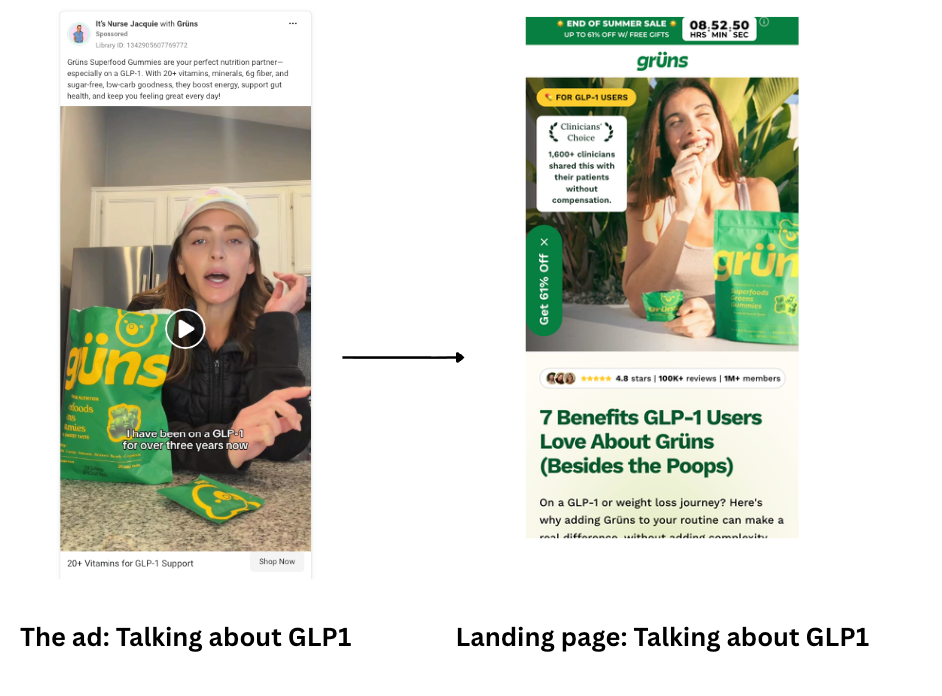
Your brand is hopefully running hundreds and thousands of ads. But are they running dozens of landing pages? This is why -> your CRO and creative strategist should not just be talking to each other, they should ideally be the same.
Paid media gives you distribution. But distribution is rented. Every impression and every click has a price, and platforms can change that price whenever they want. The strongest D2C businesses therefore build channels that allow them to keep communicating after acquisition: email, WhatsApp, SMS, community, content, education and post-purchase journeys.
But the deeper advantage is not simply having a database. It is knowing what that database is telling you. First-party data tells you what customers actually do: what they bought, when they bought, how often they buy, what they browse and what they respond to. Zero-party data tells you what customers explicitly tell you: their problem, preferences, interests, intent and potentially what they want to buy next.
This is where the pop-up becomes much more interesting. A sophisticated pop-up isn't simply 'Want 10% off?' It can create value while collecting information about what the customer actually wants. In fact, a D2C popup should ideally be multi-step, capture zero-party intent data and tell a story. That turns the first interaction into a data and relevance engine rather than just an email capture box. Our D2C popup framework
The future of retention isn't simply: collect an email address → send emails. It is: collect intent → understand the customer → personalise the journey → create value → increase LTV. In India, email and WhatsApp are particularly powerful parts of this system. Retention is not just CRM. It is infrastructure that turns a transaction into a relationship-and lets you keep monetising the attention you already paid to acquire.
Just read this whole piece if you want to master popups in a single day
Better offers improve first-purchase conversion. Better creative makes those offers relevant to a specific person and problem. Better landing pages turn that relevance into conversion. Better retention increases the value of every acquired customer. Higher LTV gives you more room to spend on acquisition. More acquisition creates more customers, more data and more opportunities to improve products, creative, segmentation and offers. Acquisition → Conversion → Retention → Expansion → Higher LTV → More acquisition. That is the real D2C flywheel.
The shift is from asking, 'How do I run better ads?' to asking, 'How do I build a system where every customer I acquire becomes more valuable over time?'
I am going to show you a simulation to prove this.
It's easy to talk about compounding.
It's harder to see what it actually does to a business.
So we ran a simple simulation. Two brands.
Same product. Same ₹1,500 price. Same ₹350 COGS. Same product quality.
The only difference is how they choose to grow.
Brand A focuses aggressively on acquisition.
It gets customers for roughly ₹500.
It has a decent repeat rate, but doesn't invest heavily in new products, retention, offer engineering, CRO or landing-page experimentation.
Brand B has a more expensive CAC—₹900.
But it has invested heavily in the rest of the growth system.
Better offers.
More relevant landing pages.
Aggressive CRO.
More creative angles.
Email and WhatsApp.
New products.
A proper retention engine.
At first, Brand A looks like the obvious winner.
And at ₹5 lakh a month in ad spend, it is.
But then we increase the spend.
At ₹20 lakh a month, Brand A's CAC has climbed from ₹500 to roughly ₹1,000.
Brand B's CAC has also increased—from ₹900 to roughly ₹1,100.
So both brands are facing the same fundamental problem:
Acquisition gets more expensive as you scale.
But here's what happens next.
Brand A is still mostly solving the acquisition problem.
Brand B has built a system where the other parts of the business are making acquisition more valuable.
Its offer increases AOV.
Its landing pages improve conversion.
Its retention increases repeat purchase.
Its new products create more reasons to buy.
Its email and WhatsApp infrastructure brings customers back.
Its creative system keeps opening new doors into the brand.
At ₹20 lakh of monthly spend, Brand A generates roughly ₹14 lakh of six-month CM2 from the customers it acquires.
Brand B generates roughly ₹26.5 lakh.
The brand that started with a ₹900 CAC ends up generating almost 2× the contribution of the brand that started with a ₹500 CAC once both brands scale.
This is what compounding actually looks like. And this is exactly the system that every top tier global D2C brand has used to scale.
A growth engine doesn't necessarily make every individual metric better.
Sometimes your CAC goes up.
Sometimes your conversion rate goes down.
Sometimes you spend more to acquire a customer.
The difference is that when the rest of the system is working, one weaker metric doesn't break the business.
The gains from AOV, conversion, retention, product expansion and owned customer relationships start compensating for the rising cost of acquisition.
That's the difference between an acquisition channel and a growth engine.
And as the business gets bigger, that difference gets bigger too.
Read the full simulation study here
The US market has already gone through many of the pressures Indian D2C is beginning to experience: rising CAC, more competition, creative fatigue, greater emphasis on LTV, more sophisticated offers, more product-led retention, more owned customer relationships and more sophisticated acquisition funnels. India is moving in the same direction. The products will be different. The consumers will be different. The brands will be different. But the underlying economic pressures-and therefore many of the underlying growth principles-will be remarkably similar. You don't copy what happened in America. You understand why it happened, and you build for India.
This is also why we have built Porcellia the way we have. Over the years, we have built specialised operating teams around the parts of the growth system that actually matter: performance and growth strategy, creative and creator strategy, CRO and landing-page optimisation, offers and contribution-margin thinking, and retention.
We were building these capabilities years before they became standard conversations in Indian D2C. Retention became a dedicated function for us in 2022. CRO became a dedicated function in 2023. The integrated playbook has been tested and refined through years of actually operating it with brands such as The Cinnamon Kitchen, Gullylabs, Oziva, NUUK, NOOE, Justhuman, Varalife and many more. This experience allows us to cut a new brand’s 0-1 journey by a solid 10-14 months.
A lot of our work is with brands creating new categories. If you are helping build something that doesn't already have a playbook in India, you can't really afford to have the back end of growth figured out one function at a time. Acquisition, conversion, product economics, retention and creative have to work together. And if you truly understand compounding, then investing in setting up your growth engine should be a no-brainer for you. You can book a call with a growth consultant here to learn more about how Porcellia can help you set up your compounding growth engine.
In a world optimized for speed and dopamine, meaning is the only thing that lasts.
Read the full storyIn a world optimized for speed and dopamine, meaning is the only thing that lasts.
Read the full story
Get your hands on the the stuff that actually compounds.
Positioning. Retention. Content. Community.

Welcome to Finsweet's accessible modal component for Webflow Libraries. This modal uses Webflow Interactions to open and close. It is accessible through custom attributes and custom JavaScript added in the embed block of the component. If you're interested in how this is built, check out the Attributes documentation page for this modal component.
See docs